
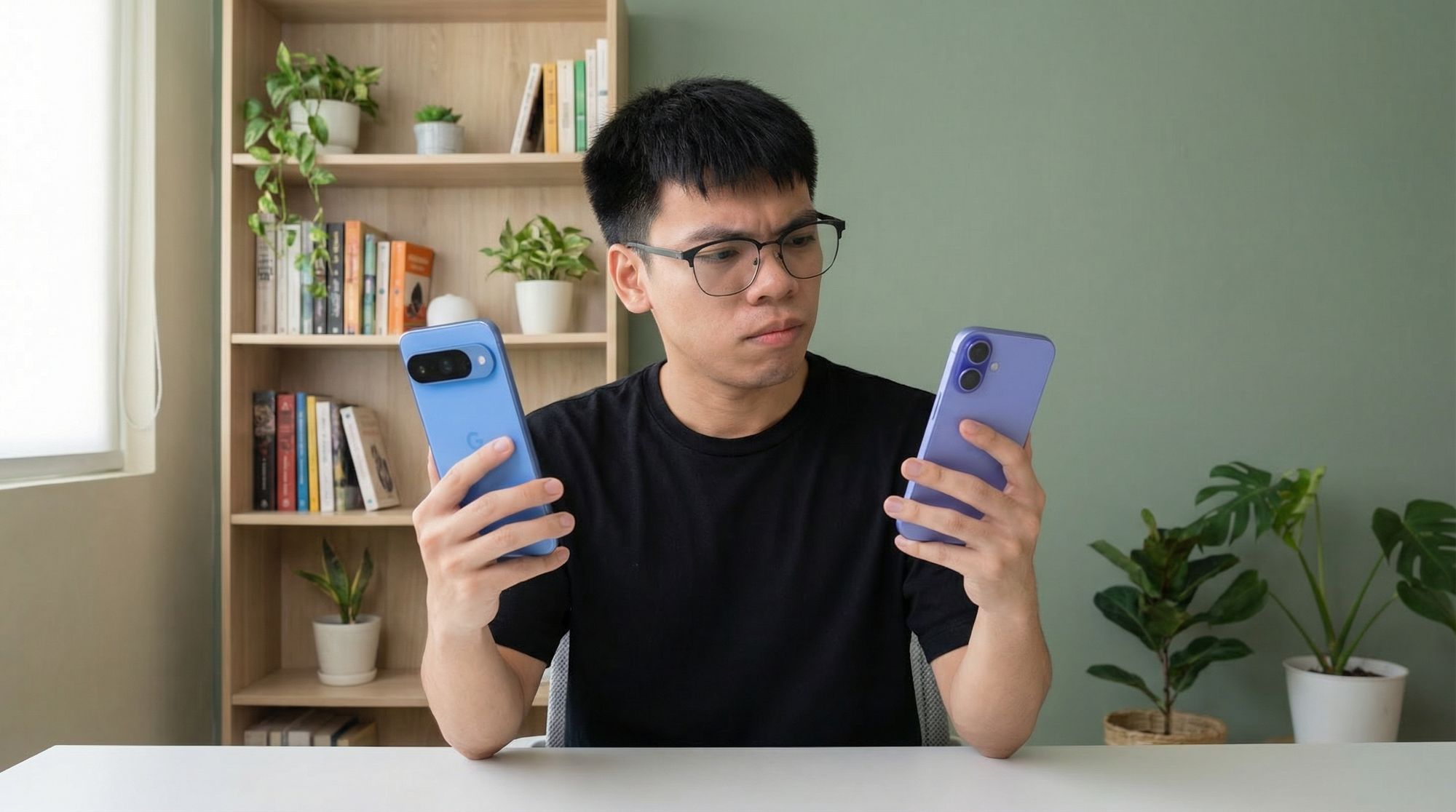
By the time you realize your Pixel phone is “too good for the country you’re in,” it’s already too late.
On paper, Google’s Pixel line is a dream: clean software, industry-leading photography, intelligent safety tools, and AI that feels years ahead. In countries where Google officially operates—especially the United States—Pixels are protected by carrier partnerships, official service centers, and a mature repair ecosystem.
But in the Philippines, reality is harsher. Here, greatness alone does not guarantee survival. In the local second-hand market, trust, accessibility, and ecosystem matter more than benchmarks or camera scores. And this is where the Pixel story quietly breaks.
The iPhones still rule, but why?
The Philippine smartphone market is brutally practical. Buyers are not just purchasing a device—they are buying a safety net.
They ask:
- “Where can I have this repaired?”
- “Are parts easy to find?”
- “Will this sell fast if I need cash?”
These questions shape value far more than camera performance or AI features.
iPhones dominate not because they are perfect—but because they are safe. They are supported, recognizable, and easy to resell. In many ways, an iPhone functions less like a gadget and more like a currency. It holds value, moves fast, and inspires confidence.
Pixels, on the other hand, are treated like rare art pieces: admired by a few, misunderstood by many, and avoided by those who cannot afford risk.
When the Market answers me.
I learned this the hard way.
When I listed my Pixel for sale, the interest was immediate—but not for the reasons I expected. Most inquiries started with curiosity and ended with hesitation.
My asking price was ₱35,000—a fair reflection of the phone’s condition, performance, and global value.
But nearly every serious buyer countered with the same number:
₱25,000.
Not because the phone was flawed. Not because it was slow, damaged, or outdated.
Buyers explained:
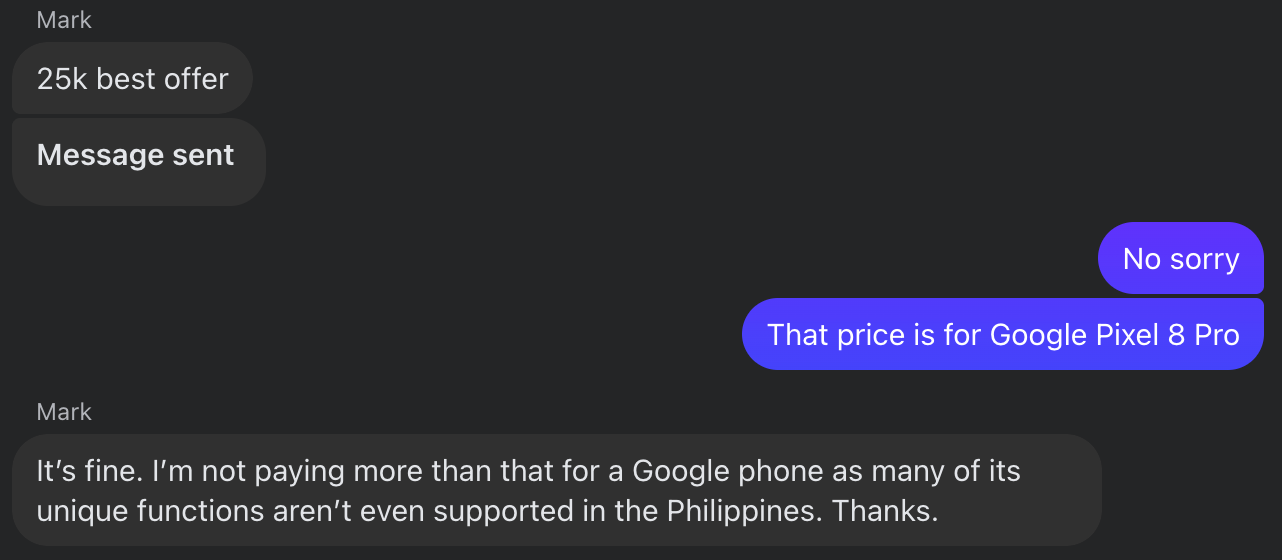

What they really meant was:
- If something breaks, there is no clear path to fix it.
- If a feature depends on foreign systems, it may never work locally.
- If they need to resell it, they face the same resistance.
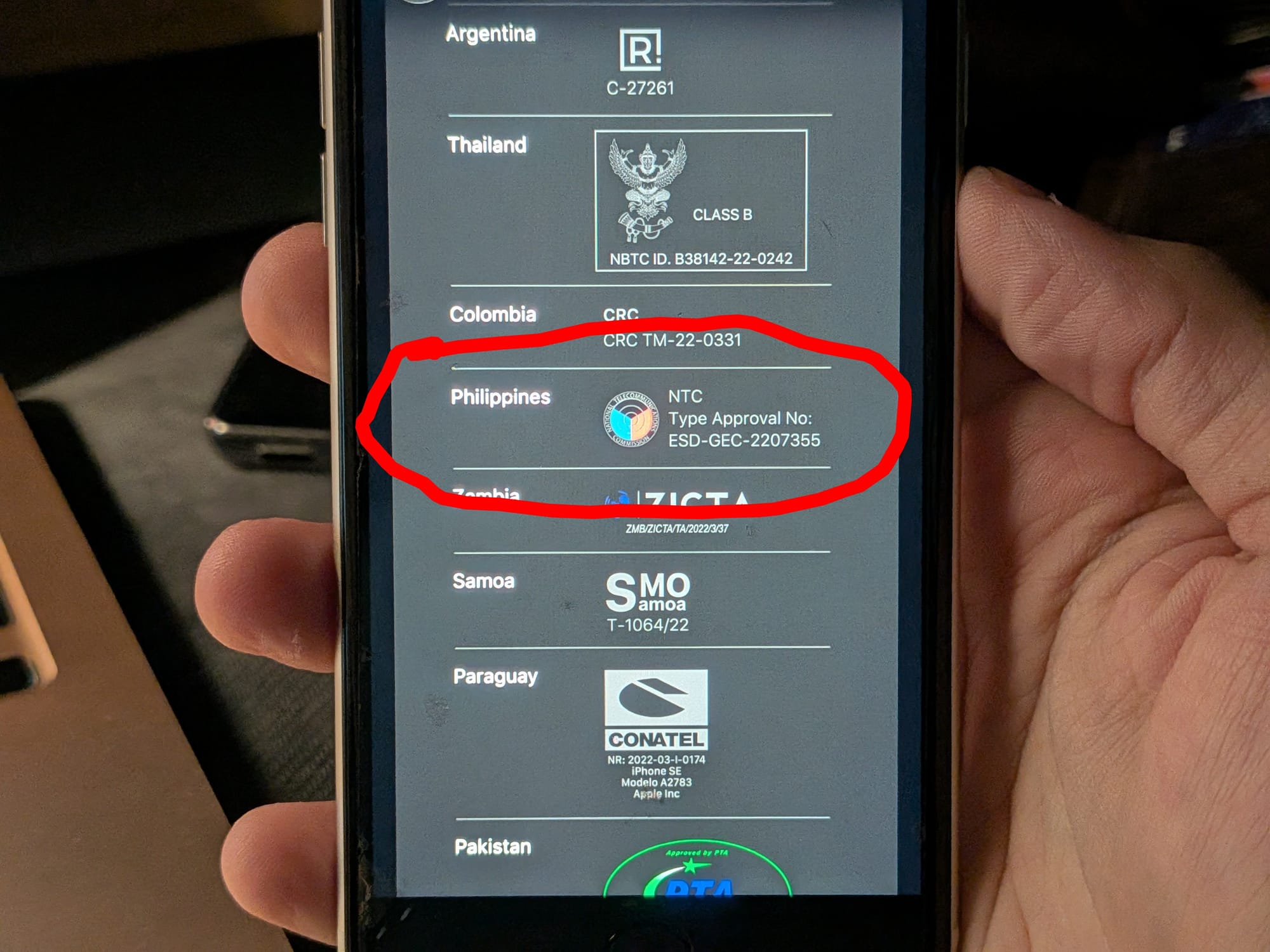
Most importantly: buyers look for the NTC-approved badge, signaling the phone is officially certified for use in the Philippines. Local variants are more respected and easier to trust than other imported models.
So they deducted the risk—before they even touched the phone.
Why I would still encourage you to buy a Google Pixel phone.
Some readers might ask: “Why buy this phone in the first place? Since you already know the situation, why choose a Pixel over an iPhone?”
Simple. Because it’s beast tech at a fair price.
Unlike iPhones, which are largely a status symbol, Pixels give you the hardware power without demanding a social premium.
Plus, modern Pixels can now communicate seamlessly with iPhones—AirDrop-like transfers, cross-platform sharing—bridging ecosystems in ways you wouldn’t expect.
And here’s the quiet advantage in the Philippines: it’s low-profile. No thieves would target it, because it’s not yet popular. You can carry a flagship device without drawing attention, unlike iPhones, which scream “grab me.”
Pixels in the Philippines are a bit like hidden treasures: loved by those in the know, but invisible to the masses.
When Google’s Tech isn’t just competing, it’s powering the competition.
It’s ironic that while some say iPhones “own” premium hardware and seamless software, a deeper look at recent tech developments shows just how strong Google’s technology has become — strong enough that Apple itself is now leaning on it.
In early 2026, Apple officially announced a multi‑year partnership with Google, in which Google’s generative AI models, known as Gemini, will power the next generation of Apple Intelligence features and the revamped Siri assistant on iPhones and iPads.
This is significant for a couple of reasons:
- AI leadership matters in smartphone experience. Apple — a company known for building almost all of its technologies in-house — chose Google’s AI as a foundation for core features. That suggests Google’s models are at least competitive with, if not superior to, Apple’s own generative models.
- It blurs the lines between ecosystems. iPhone users now benefit from an AI engine originally developed for Android, giving them advanced language understanding, contextual awareness, and task automation features that Siri previously struggled with.
In other words, Google’s software prowess has become so compelling that even Apple integrates it to enhance its flagship phones. That doesn’t diminish Apple’s ecosystem — but it underscores how capable Google’s technology really is.
The hard truth about the Philippine Market.
While Pixels have the tech, the infrastructure matters. Many of their most celebrated safety and connectivity features rely on backend systems, carrier partnerships, and regional infrastructure that simply do not exist locally.
In the Philippine resale ecosystem:
- iPhones are liquid
- Pixels are illiquid
- Demand is emotional for Apple, rational for Google
- One sells in hours, the other in weeks
This is not a judgment on technology. It is a reflection of infrastructure.
Pixels are gold in the United States, diamonds in the Philippines — beautiful, powerful, but not fully supported.
Loving the right phone in the wrong place.
It is possible to love a phone and still admit that it is not a strategic choice where you live.
Sometimes, the best device is not the best decision.
And sometimes, the hardest part is not letting go of a phone —
but letting go of the version of the market you wish existed.
The Pixel deserves better.
But until the ecosystem arrives,
the Philippines will continue to choose safety over brilliance.
And that, more than specs, decides everything.